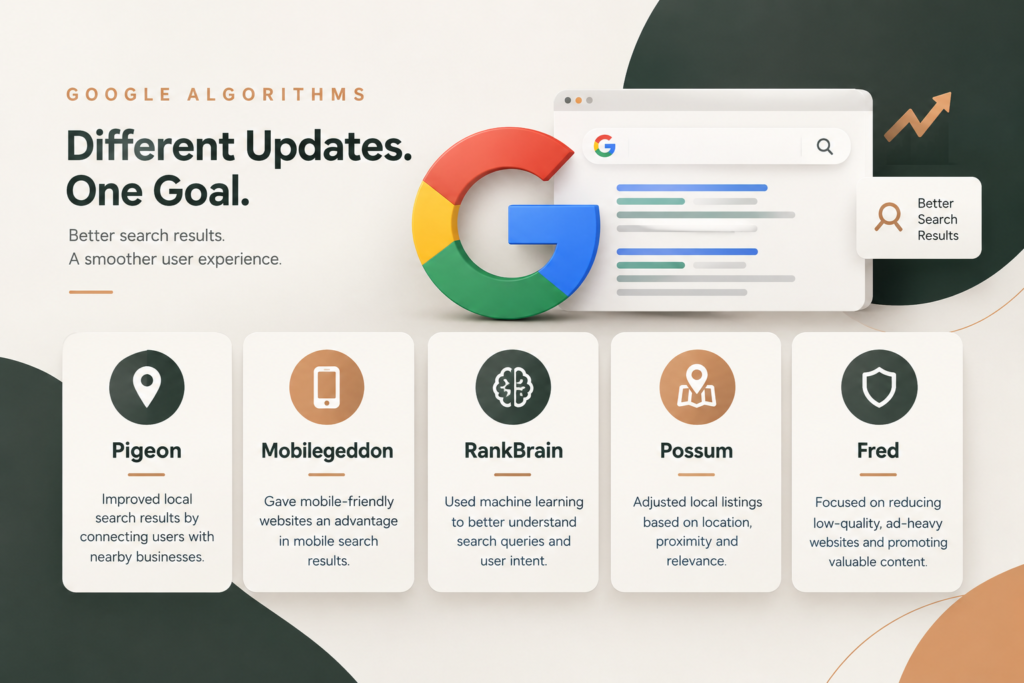
Google’s search algorithms are systems that help determine which web pages appear in search results based on relevance, quality, and user experience. They analyse various signals to connect users with the most useful information. For digital marketers, understanding these algorithms is essential for creating SEO-friendly content, improving website visibility, and reaching the right audience organically.
1. Pigeon Algorithm
Google introduced the Pigeon update in 2014 to improve local search results. It helped connect users with relevant local businesses by strengthening the connection between local search and traditional ranking signals. This update made local SEO more important for businesses that want to reach customers in specific locations.
2. Mobilegeddon Algorithm
Mobilegeddon is the popular name for Google’s mobile-friendly update introduced in 2015. It gave mobile-friendly pages an advantage in mobile search results. This update encouraged website owners to create responsive websites that are easy to navigate and read on smartphones and other mobile devices.
3. RankBrain Algorithm
RankBrain was introduced in 2015 as a machine-learning system that helps Google understand search queries and their relationship to relevant content. It is particularly useful when interpreting unfamiliar or complex searches. For digital marketers, this highlights the importance of creating clear, relevant content that genuinely answers users’ questions.
4. Possum Algorithm
Possum is the informal name given to a local search update released in 2016. It changed how Google filtered and displayed local business listings, making factors such as the searcher’s location and a business’s proximity more significant in local results. It also helped diversify some local search listings, making local SEO an important focus for businesses.
5. Fred Algorithm
Fred is the informal name associated with a Google algorithm update observed in 2017. It was widely linked to websites that prioritised advertising and monetisation over useful content. The update highlighted the importance of providing valuable information, maintaining a good user experience, and avoiding excessive advertisements that distract visitors.
Conclusion
Understanding Google’s algorithms is an important part of successful SEO. From improving local search visibility to creating mobile-friendly websites and valuable content, each update offers lessons for digital marketers. By focusing on user needs, relevant information, and a positive website experience, businesses can build a stronger online presence and support long-term organic growth.