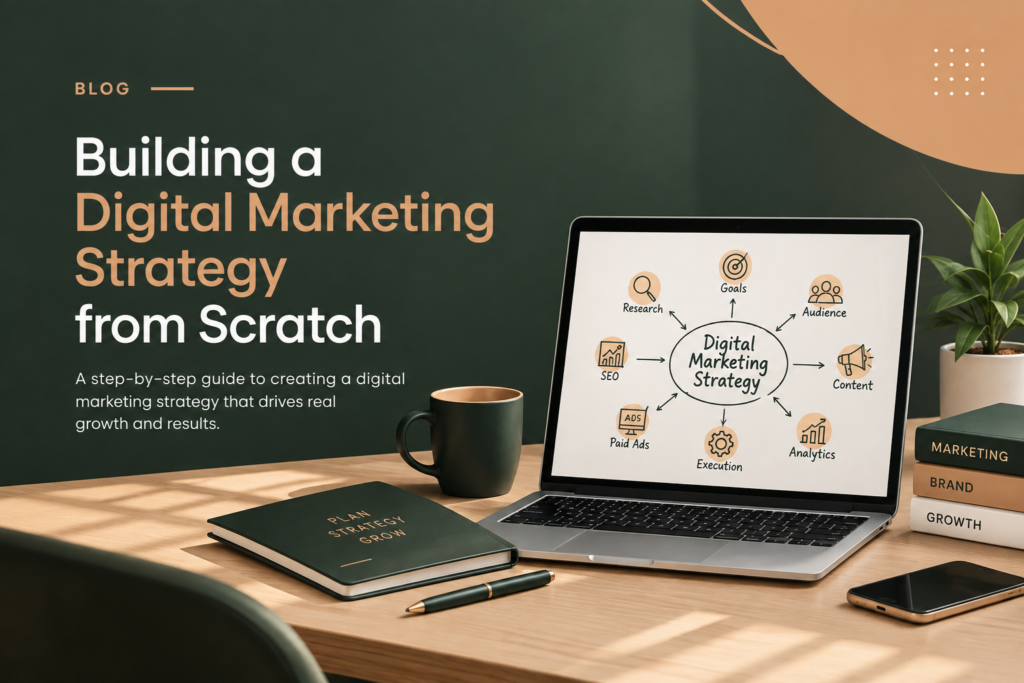
A successful digital marketing strategy doesn’t start with posting content—it starts with understanding the brand, audience, and goals. When the right strategy is in place, every campaign, post, and advertisement has a clear purpose.
1. Define Your Goal
Start by identifying what you want to achieve. Whether it’s increasing brand awareness, generating leads, driving sales, or building an online community, clear goals help shape the entire strategy.
2. Know Your Audience
Understand who you’re trying to reach. Research their interests, needs, challenges, online behavior, and the platforms they use. The better you understand your audience, the easier it becomes to create content that connects with them.
3. Build Your Brand Presence
Your website, social media profiles, content, and visual identity should communicate a consistent message. A strong digital presence helps create recognition and trust.
4. Create Valuable Content
Content is at the heart of digital marketing. Create useful, engaging, and relevant content that educates, entertains, or solves problems for your audience. Focus on providing value rather than simply promoting your brand.
5. Choose the Right Channels
You don’t need to be everywhere. Choose platforms based on where your target audience spends their time. Social media, SEO, email marketing, paid advertising, and content marketing can all play different roles in your strategy.
6. Measure and Improve
Digital marketing is an ongoing process. Track important metrics such as reach, engagement, website traffic, leads, and conversions. Use these insights to understand what works and continuously improve your strategy.
The Takeaway
Building a digital marketing strategy from scratch is about creating a clear path from your brand’s goals to your audience’s needs. With the right combination of creativity, strategy, consistency, and data, you can turn your digital presence into a powerful growth engine.
Ready to build a stronger digital presence?
Let’s turn your ideas into a strategy that connects, engages, and drives growth.
Pingback: The Power of Data-Driven Marketing – farhant.com